Answer engine optimization (AEO) is the practice of making your brand and content the source that AI answer engines quote, cite and recommend. Answer engines include Google AI Overviews, Google AI Mode, ChatGPT search, Perplexity, Microsoft Copilot and Claude. They reply with a written answer instead of ten blue links, and they name only a handful of sources inside that answer.
This guide covers 5 things: how those engines pick sources, the crawler settings that let them read your site, the writing patterns they quote, why brand mentions correlate with AI visibility more strongly than backlink counts, and a monthly tracking method. It also includes our own analysis of 154 AI Overview citations across 20 link building searches. Third party figures name their source, and our own estimates are labelled as ours.
- Answer engine optimization earns your brand a mention or citation inside AI answers from Google, ChatGPT, Perplexity, Copilot and Claude.
- Pew Research Center found people clicked traditional results on 8% of visits with an AI summary, against 15% without one.
- In our analysis of 154 AI Overview citations across 20 link building searches, only 38% of cited pages also ranked in the organic top 10, and YouTube supplied 17%.
- Allow the search crawlers (OAI-SearchBot, PerplexityBot, Claude-SearchBot, Googlebot, Bingbot); blocking only training bots keeps you visible.
- Branded web mentions showed a 0.664 correlation with AI Overview visibility in an Ahrefs study of 75,000 brands, against 0.218 for backlink counts.
- Track 30 to 50 prompts, 3 runs each, across 5 engines every month to measure citation rate.
What is answer engine optimization?
Answer engine optimization is the work of earning a mention or a cited link inside an AI generated answer. Classic SEO aims for a ranking position on a results page. AEO aims for inclusion in the single answer a person reads.
The term overlaps with 3 other labels used in the industry:
- GEO (generative engine optimization): the same goal, named after the generative models that write the answer.
- LLM optimization: the same goal, framed around large language models such as GPT and Gemini.
- AI search optimization: the umbrella label most software vendors use.
The tactics behind all 4 labels are the same: a crawlable site, answer first content, consistent entity information and a brand that other trusted sites talk about. Our AI SEO services page shows how we package that work.
Why does AEO matter now?
AEO matters because people click traditional results far less often when an AI summary appears. A Pew Research Center study tracked the Google searches of 900 US adults during March 2025. People clicked a traditional search result on 8% of visits when Google showed an AI summary, against 15% of visits without one. The study is observational, so it shows a strong association rather than proof of cause. AI summaries appeared on 18% of the 68,879 searches in that study, and only 1% of visits included a click on a link inside the summary.
The audience for these answers is large:
- Google AI Overviews: over 2.5 billion monthly users, and Google AI Mode: more than 1 billion monthly users, as announced at Google I/O in May 2026.
- ChatGPT: about 900 million weekly users as of February 2026, as reported by TechCrunch.
- Gemini app: 900 million monthly users, also announced at Google I/O 2026.
The practical result is that a top 3 ranking no longer guarantees attention. The brand named inside the answer gets the trust, and frequently the visit, even when the click never happens.
How do answer engines choose which sources to cite?
Answer engines retrieve pages from a search index, pull the passages that answer each part of the question, and cite the sources those passages came from. The process runs in 4 steps:
- Index: a crawler stores your pages. A page outside the index cannot be cited.
- Query fan out: the engine splits one question into related sub questions. Google describes this as "issuing multiple related searches across subtopics and data sources" in its documentation on AI features.
- Passage selection: the engine picks the paragraphs, lists and table rows that answer each sub question most directly.
- Synthesis and citation: the model writes the answer and attaches links to the pages it used.
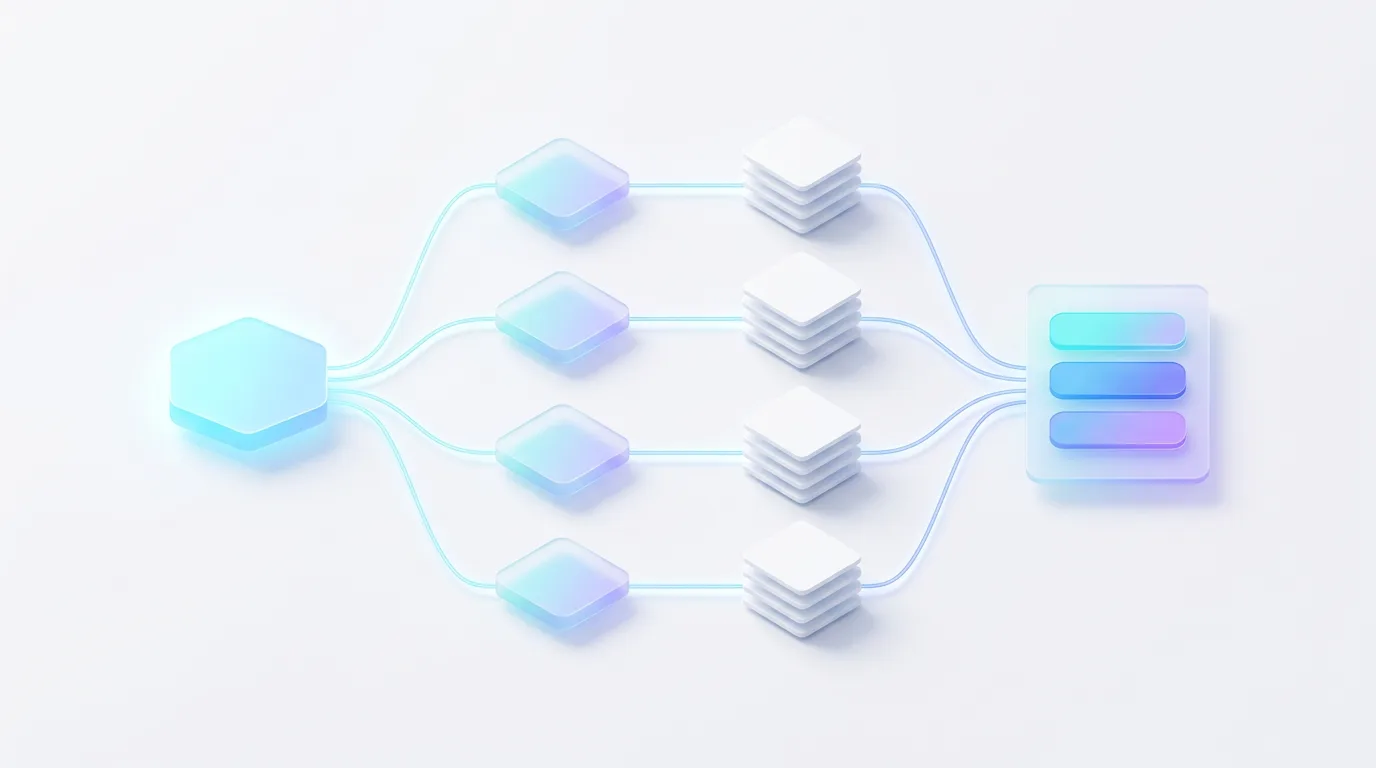
Each engine draws on a different index, which is why your visibility varies from one platform to the next:
| Answer engine | Where its sources come from | Crawler that controls inclusion |
|---|---|---|
| Google AI Overviews and AI Mode | Google Search index | Googlebot |
| ChatGPT search | OpenAI search index plus search partners | OAI-SearchBot |
| Perplexity | Perplexity index | PerplexityBot |
| Microsoft Copilot | Bing index | Bingbot |
| Gemini app | Google Search grounding | Googlebot, with Google-Extended controlling Gemini use |
| Claude | Web search run by Anthropic | Claude-SearchBot and Claude-User |
Do you need a top 10 ranking to be cited in AI Overviews?
No. In our analysis, 62% of the pages cited in Google AI Overviews for link building searches did not rank in the organic top 10 for that search. We pulled the US results for 20 link building searches from Ahrefs SERP data on October 29, 2026. Every one of the 20 searches showed an AI Overview. We then compared each page cited inside the AI Overview with the 10 organic results below it.
| Search | Pages cited in the AI Overview | Cited pages also in the top 10 | YouTube videos cited |
|---|---|---|---|
| link building services | 7 | 2 | 0 |
| link building agency | 11 | 6 | 1 |
| best link building services | 3 | 1 | 0 |
| link building strategies | 9 | 1 | 0 |
| how to get backlinks | 11 | 0 | 5 |
| what is link building | 3 | 3 | 0 |
| buy backlinks | 9 | 5 | 2 |
| guest posting services | 10 | 0 | 2 |
| white label link building | 3 | 3 | 0 |
| digital pr | 8 | 4 | 1 |
| niche edits | 7 | 2 | 1 |
| blogger outreach services | 9 | 5 | 0 |
| link building packages | 11 | 3 | 1 |
| local link building | 8 | 5 | 2 |
| saas link building | 10 | 2 | 4 |
| high quality backlinks | 3 | 3 | 0 |
| seo link building services | 9 | 5 | 4 |
| haro link building | 8 | 4 | 1 |
| link building cost | 8 | 0 | 0 |
| ecommerce link building | 7 | 4 | 2 |
| Total | 154 | 58 (38%) | 26 (17%) |
The 154 citations came from 96 different domains. 4 patterns stand out:
- A top 10 ranking helps but is not required. Fewer than 4 in 10 cited pages also held a top 10 position for the same search. Query fan out is a likely reason, since Google describes AI Overviews drawing on related sub searches, though our data cannot prove the mechanism.
- Video earns a large share of citations. YouTube supplied 26 of the 154 citations (17%), including 5 of the 11 for "how to get backlinks" and 4 of the 9 for "seo link building services".
- Reddit and Quora were rare in Google's answers. Only 3 citations (2%) came from Reddit or Quora, even though Reddit threads ranked organically on 8 of the 20 searches.
- "Best of" list articles appeared but did not dominate. 12 of the 154 citations (8%) were list articles, concentrated on commercial searches such as "best link building services" (2 of 3) and "link building agency" (3 of 11).
This sample covers 20 searches in one niche on a single day, so treat it as directional rather than universal. It still shows that a page outside the top 10, and especially a useful video, can earn a place inside the answer.
How is AEO different from SEO?
AEO optimizes individual answers and brand mentions, while SEO optimizes whole pages for ranking positions. The foundations are shared: an answer engine still relies on an index, so a page with poor technical SEO rarely gets cited.
| Factor | SEO | AEO |
|---|---|---|
| Unit you optimize | A page | A passage, table row or definition |
| Win condition | A top ranking position | A mention or citation inside the answer |
| Main off site signal | Backlinks | Brand mentions across trusted sites, plus backlinks |
| Core metric | Rankings, clicks, organic traffic | Citation rate, share of voice in answers, branded search |
| Content style | Comprehensive pages for a keyword | Direct answers, clear entities, quotable facts |
AEO does not replace SEO. It adds a second scoreboard on top of the first one.
How do you make sure AI crawlers can access your site?
Check your robots.txt file for the search crawlers of each answer engine and allow them. AI companies run separate bots for model training and for search answers, and blocking the wrong one removes you from AI answers without warning.
| User agent | Company | What it does | Effect of blocking it |
|---|---|---|---|
| OAI-SearchBot | OpenAI | Builds the index for ChatGPT search | Your pages drop out of ChatGPT search answers |
| GPTBot | OpenAI | Collects content for model training | No training use; ChatGPT search is unaffected |
| ChatGPT-User | OpenAI | Fetches a page when a user asks ChatGPT to | OpenAI notes robots.txt rules may not apply to user requests |
| PerplexityBot | Perplexity | Surfaces and links sites in Perplexity results | Your pages stop appearing in Perplexity results |
| Perplexity-User | Perplexity | Fetches a page when a user asks a question | Perplexity states it generally ignores robots.txt for user requests |
| Claude-SearchBot | Anthropic | Improves Claude search results | Lower visibility in Claude search answers |
| Claude-User | Anthropic | Fetches a page when a user asks Claude a question | Claude cannot read your page for that user |
| ClaudeBot | Anthropic | Collects content for model training | No training use |
| Google-Extended | Controls use in Gemini training and grounding | Google Search, AI Overviews and AI Mode are governed by Googlebot, not this token |
A robots.txt setup that keeps search visibility while opting out of OpenAI and Anthropic model training looks like this:
User-agent: OAI-SearchBot
Allow: /

User-agent: PerplexityBot
Allow: /

User-agent: Claude-SearchBot
Allow: /

User-agent: GPTBot
Disallow: /

User-agent: ClaudeBot
Disallow: /
Google-Extended is a trade off: disallowing it limits Gemini training and grounding, and it can also reduce how often the Gemini app draws on your pages. It has no effect on Google Search, AI Overviews or AI Mode.
Two more checks matter. First, review your firewall and CDN bot settings, because a block there stops a crawler before it ever reads robots.txt. Cloudflare began blocking known AI crawlers by default for new domains in July 2025, so sites on Cloudflare often block answer engines without knowing it. Second, keep important content in the HTML text itself, as Google recommends. An llms.txt file is an optional extra, not a requirement for any engine.
How do you find the questions to target for AEO?
Collect the exact questions buyers ask from 5 sources, then group them by intent. Answer engines respond to questions, so your prompt set and your headings both start here.
- Google People Also Ask boxes for your main topics.
- Keyword tools with a questions filter, such as the Ahrefs matching terms report, which also show search volume for each question.
- Reddit and Quora threads in your niche, which show the wording real buyers use.
- Sales calls, chat logs and support tickets, which surface objections no keyword tool shows.
- Google Search Console queries that already bring impressions to your site.
Sort the list into 4 groups: definitions, comparisons, pricing and problems. Each group maps to a page type, and each question becomes either a heading, an FAQ or a prompt in your tracking set.
How do you write content that answer engines quote?
Write a direct answer of 1 to 2 sentences under every heading, then support it with specific facts. Answer engines lift self contained passages, so each section works on its own.
Use these 6 patterns on every page you want cited:
- Phrase headings as the question people type or speak, for example "How much does a guest post cost?"
- Put the answer in the first sentence and bold the answer itself, not the keyword.
- Name entities and give them attributes: prices, dates, counts, ranges and sources.
- Use tables for comparisons and numbered lists for steps, because both split cleanly into quotable rows.
- Show a visible update date and refresh facts when they change.
- Keep claims consistent across your site, profiles and listings so the engine finds one version of the truth.
Here is a before and after rewrite of one paragraph from a link building page:
| Before | After |
|---|---|
| Guest posting is known as one of the most powerful ways to grow your rankings, and pricing varies a lot depending on many factors. | A guest post on a DR 30+ blog costs between $102 and $388 at our agency, depending on the site's Domain Rating and traffic. Each order includes the article, a dofollow link and a live URL report within 14 days. |
The second version contains a price range, a metric, a deliverable and a timeline. An answer engine quotes that kind of sentence because it answers the question without extra context.
Does schema markup help with AEO?
Schema markup helps engines understand your entities, but it does not earn citations on its own. Google states that there is "no special schema.org structured data that you need to add" for AI Overviews or AI Mode. Google also advises making sure structured data matches the visible text on the page.
Use schema where it describes real content:
- Organization: your legal name, logo, contact points and sameAs links to your official profiles, so engines connect your brand mentions to one entity.
- Article: author or editorial team, publish date and update date.
- FAQPage: only for genuine question and answer content that appears on the page.
- Product or Offer: real prices for real services.
Treat schema as a clarity layer on top of strong visible content, never as a substitute for it.
Why do brand mentions matter for AI visibility?
Branded web mentions showed the strongest correlation with Google AI Overview visibility in a 75,000 brand study. Ahrefs analyzed 75,000 brands in a study published by Louise Linehan in May 2025. It compared ranking factors with how often each brand appeared in Google AI Overviews:
| Factor | Spearman correlation with AI Overview mentions |
|---|---|
| Branded web mentions | 0.664 |
| Branded anchor text | 0.527 |
| Branded search volume | 0.392 |
| Domain Rating | 0.326 |
| Referring domains | 0.295 |
| Number of backlinks | 0.218 |
The study covers Google AI Overviews only, and the authors note that correlation does not prove causation. The pattern still matches how answer engines work: they summarize what trusted sources say about a brand. A backlink still matters because it helps a page enter and rank in the index. A mention matters because it puts your brand name next to the topic inside the text the model reads.
5 ways to build mentions that AI answers can pick up:
- "Best of" list inclusions on sites that already rank for your category. Our brand mentions service places brands in these lists from $286 per placement.
- Community threads on Reddit, Quora and niche forums. Reddit threads ranked organically on 8 of the 20 link building searches we analyzed, though Reddit and Quora earned only 2% of the AI Overview citations, so treat threads as a visibility and trust play rather than a direct citation source. See our community mentions campaigns.
- Digital PR coverage in news and industry publications through digital PR campaigns.
- Editorial links with branded anchors from established publications through editorial link building.
- Short YouTube explainers that answer one question each. YouTube supplied 17% of the AI Overview citations in our sample.
How do you measure AEO results?
Measure AEO by testing a fixed set of prompts across each answer engine every month and recording whether your brand is mentioned or cited. AI answers change between runs, so a single check proves nothing. A repeatable protocol does.
- Build a prompt set of 30 to 50 questions buyers ask, split across definitions, comparisons ("best X for Y"), pricing and problem questions.
- Run each prompt 3 times on Google AI Overviews, Google AI Mode, ChatGPT, Perplexity, Copilot and Gemini, in a logged out or private session.
- Record 4 fields per run: brand mentioned (yes or no), your URL cited (yes or no), position in the answer, and the competitors named.
- Calculate citation rate as the share of runs that mention your brand, per engine and overall.
- Repeat on the same day each month so trends reflect your work, not random variation.
A simple tracking sheet looks like this:
| Prompt | Engine | Mentioned (3 runs) | Cited URL | Competitors named |
|---|---|---|---|---|
| best link building agency for SaaS | ChatGPT | 2 of 3 | /saas-link-building/ | Agency A, Agency B |
| how much does a guest post cost | Perplexity | 1 of 3 | /pricing/ | Marketplace C |
The example rows show the format only. Add 3 supporting signals. First, referral sessions from chatgpt.com, perplexity.ai, copilot.microsoft.com, gemini.google.com and claude.ai in Google Analytics 4. Second, branded search impressions in Google Search Console, which counts AI Overview and AI Mode traffic inside the standard Web report rather than separately. Third, a "How did you hear about us?" field on your forms. Ahrefs Brand Radar tracks AI mentions at scale once a manual baseline exists.
What are the limits and risks of AEO?
AEO results are volatile, hard to attribute and partly outside your control. Plan for 4 limits before you set targets:
- Volatility: the same prompt produces different answers on different runs, so single checks mislead.
- Attribution: a mention inside an answer often leads to a later branded search or direct visit, not a tracked referral.
- Accuracy: answer engines sometimes misstate prices, features or facts about a brand, which is why consistent information across your site and profiles matters.
- Evidence: most published AEO research is correlational and covers a single engine, so test changes on your own pages before scaling them.
The 5 most common mistakes we see are blocking OAI-SearchBot or PerplexityBot by accident, adding schema without changing the visible content, quoting statistics without a source, chasing every engine at once instead of the 2 or 3 your buyers use, and letting key pages go a year without an update.
What does a 90 day AEO plan look like?
A 90 day AEO plan moves from access and baseline, to content fixes, to off site mentions. The order matters because content and mentions cannot help if engines cannot read your site.
| Weeks | Focus | Deliverables |
|---|---|---|
| 1 to 2 | Access and baseline | robots.txt and firewall check for Googlebot, Bingbot, OAI-SearchBot, PerplexityBot and Claude-SearchBot, Organization schema with sameAs links, first prompt tracking run |
| 3 to 6 | Content | Answer first rewrites of the 10 pages tied to revenue, comparison tables, visible update dates, FAQ sections built from real questions |
| 7 to 12 | Mentions and authority | 5 to 10 list inclusions, 1 digital PR story, community answers in relevant threads, branded anchor links |
| 13 | Review | Second prompt tracking run, citation rate by engine, next quarter priorities |
Our planning estimate is 1 to 3 months between new off site mentions and their first appearance inside answers, since engines first recrawl the pages that mention you. That range is our own estimate, not a published study, and it varies by niche. After the first cycle, refresh the 10 priority pages every quarter so dates, prices and facts stay current.
Frequently asked questions
What does AEO stand for in marketing?
AEO stands for answer engine optimization. It is the practice of getting a brand mentioned or cited inside AI generated answers from tools such as Google AI Overviews, ChatGPT and Perplexity.
Does AEO replace SEO?
No. Answer engines retrieve sources from search indexes, so technical SEO, crawlable pages and authority still decide which pages are eligible. AEO adds answer first content, entity clarity and brand mentions on top of SEO.
Does blocking GPTBot remove my site from ChatGPT?
No. GPTBot collects content for model training. OpenAI states that OAI-SearchBot controls whether a site appears in ChatGPT search answers, so blocking GPTBot alone does not remove you from ChatGPT search.
Do I need an llms.txt file for AEO?
No. llms.txt is an optional proposal, and none of the major answer engines lists it as a requirement. Crawl access, clear content and brand mentions carry far more weight.
How long does AEO take to show results?
There is no published benchmark. Access and content fixes take effect once engines recrawl your pages, and our own planning estimate for off site mentions is 1 to 3 months before they appear inside answers, depending on the niche.
Can a small brand win in AI answers?
Yes. Answer engines cite the passage that answers the question best, so a small site with a precise answer, a clear entity profile and well placed mentions in its niche can appear next to much larger brands. In our analysis, 62% of AI Overview citations went to pages outside the organic top 10.